
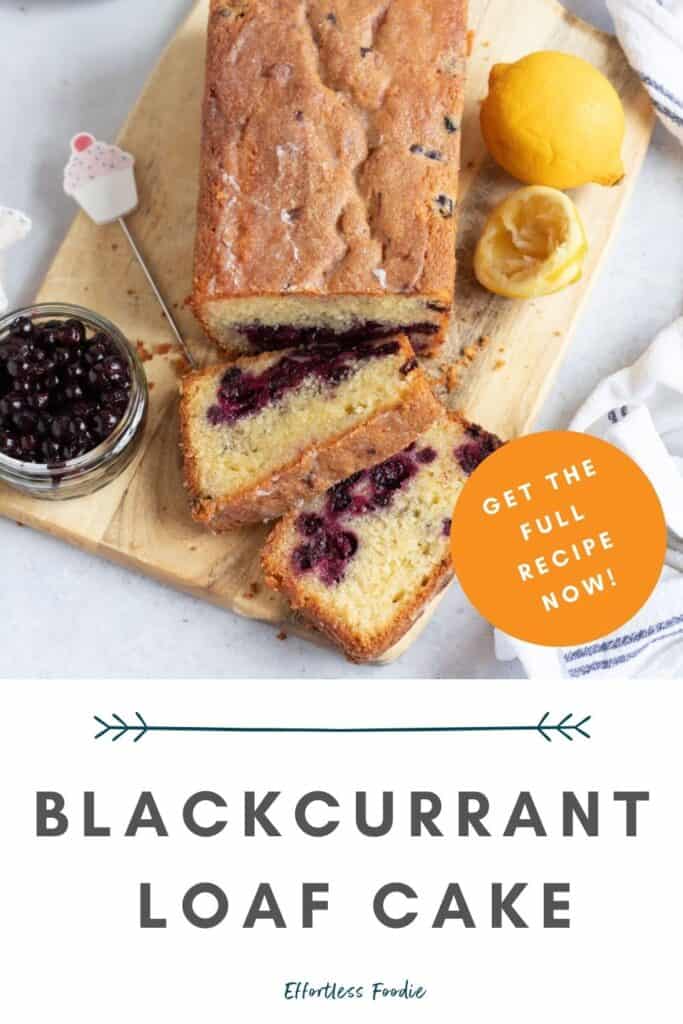
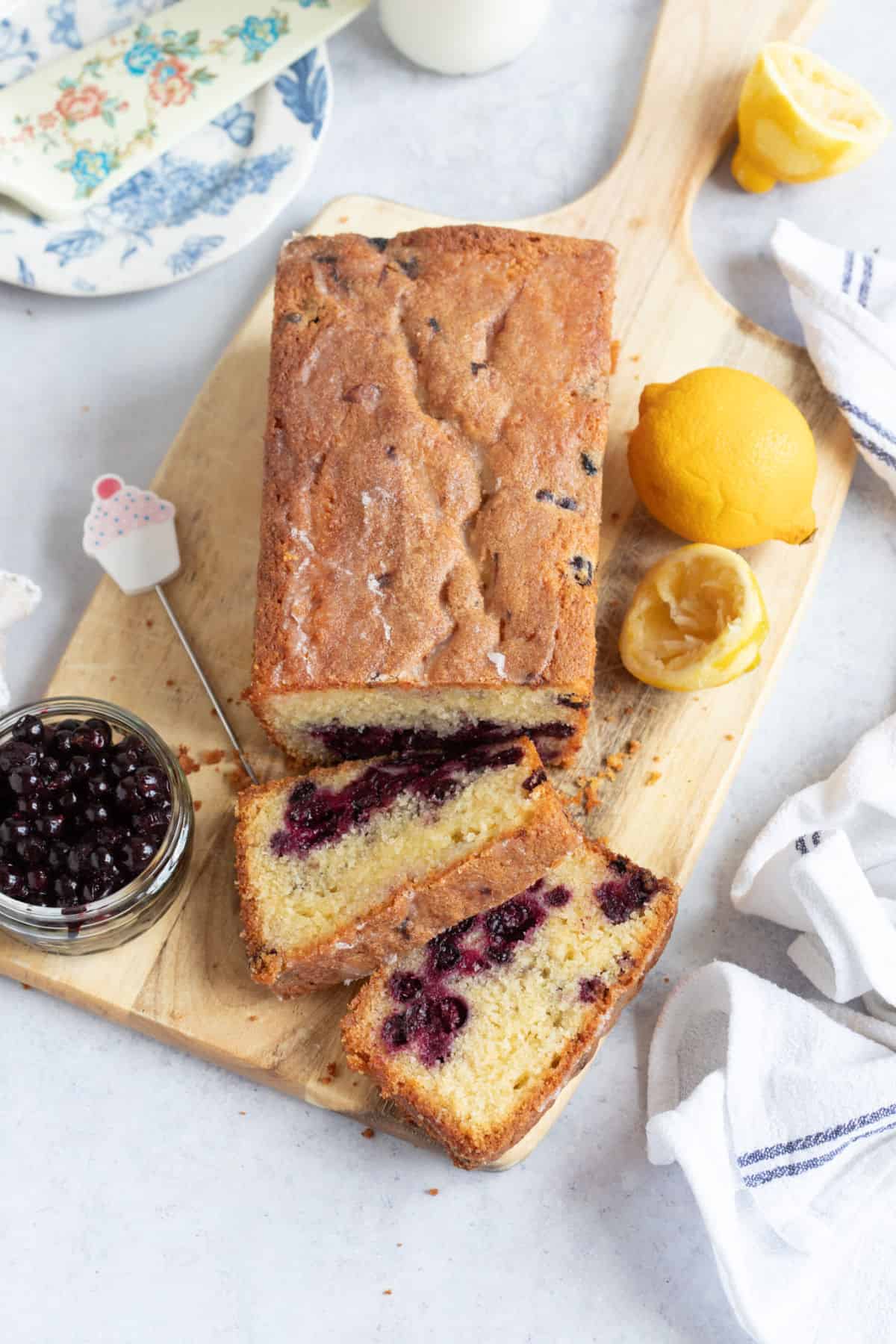
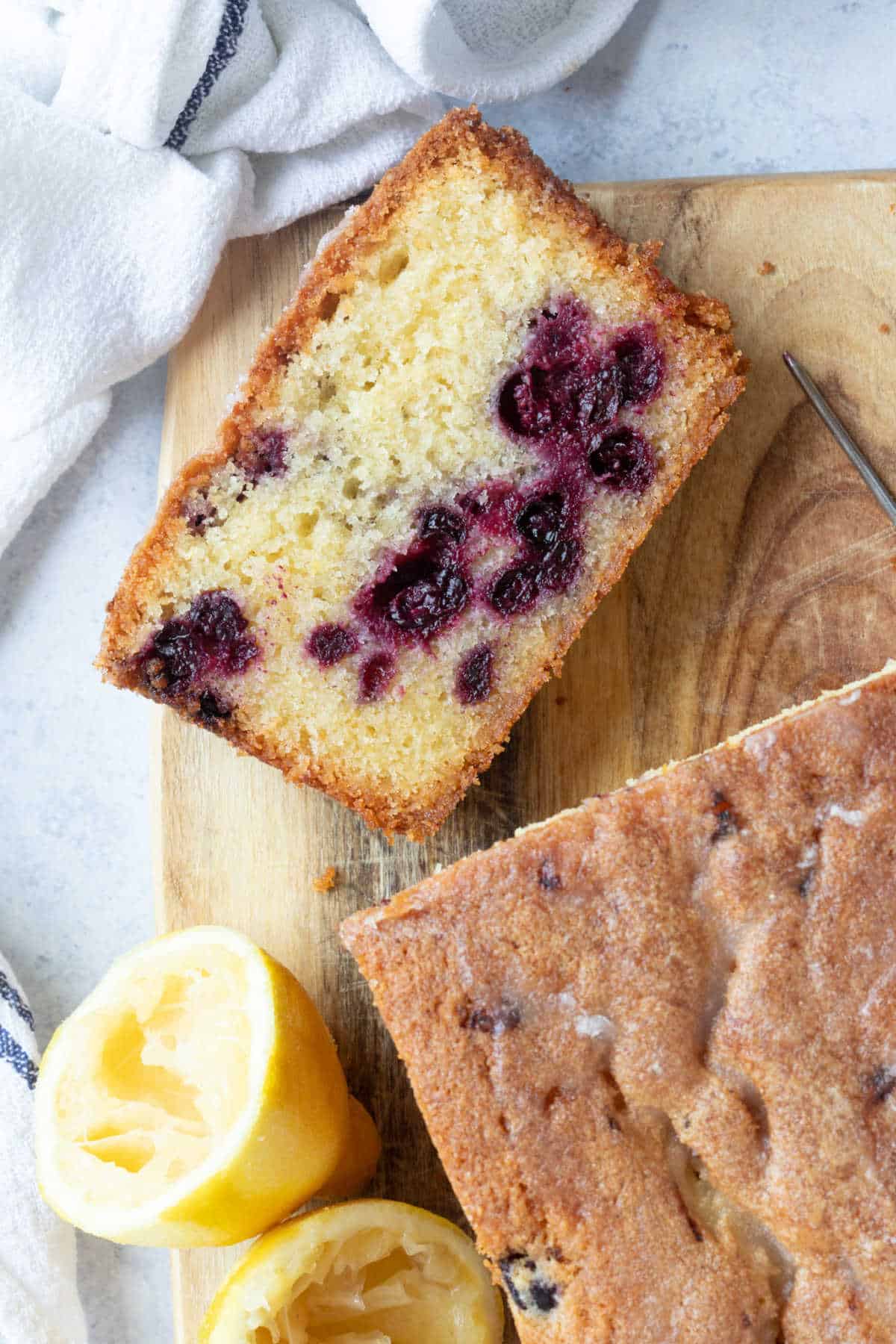
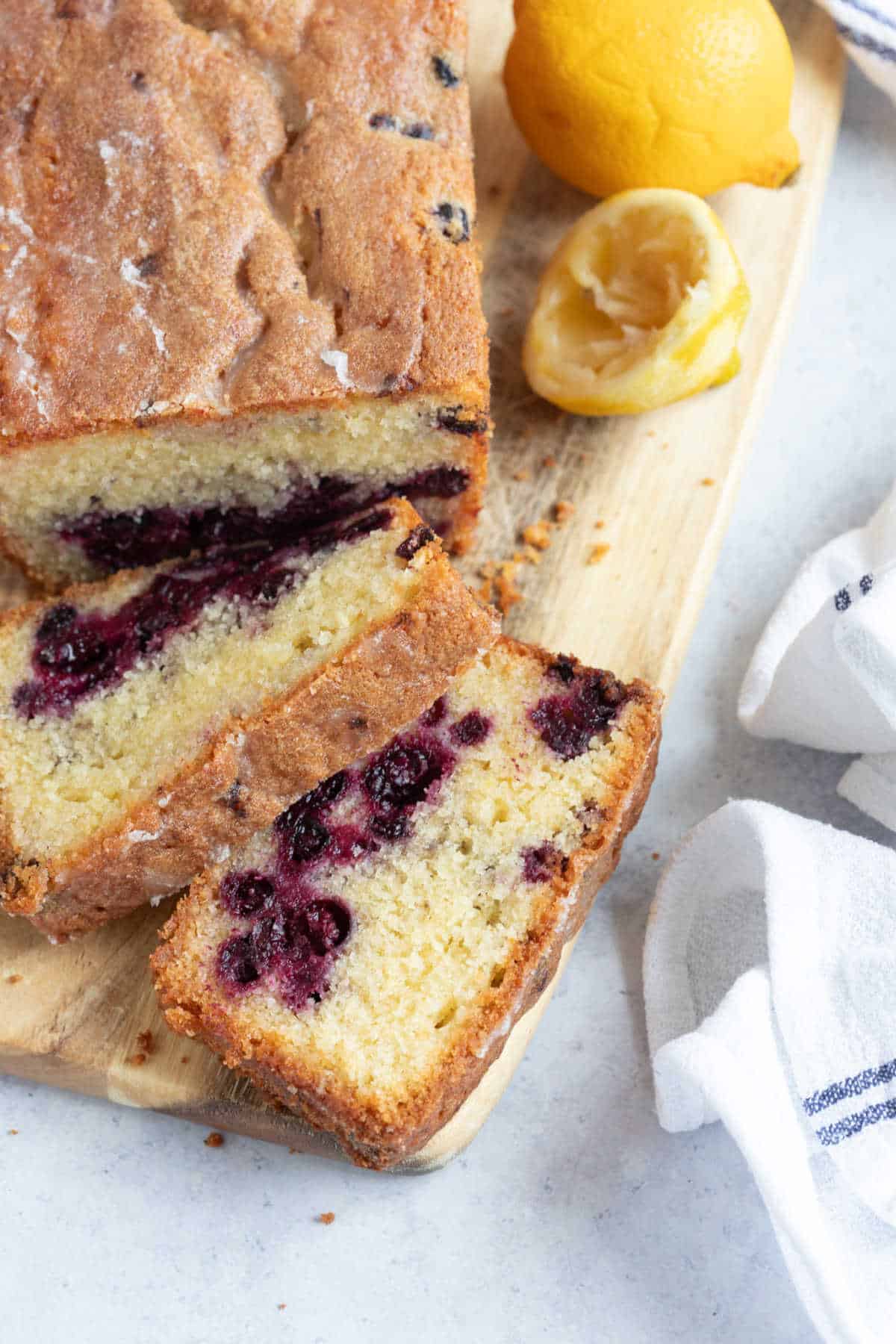
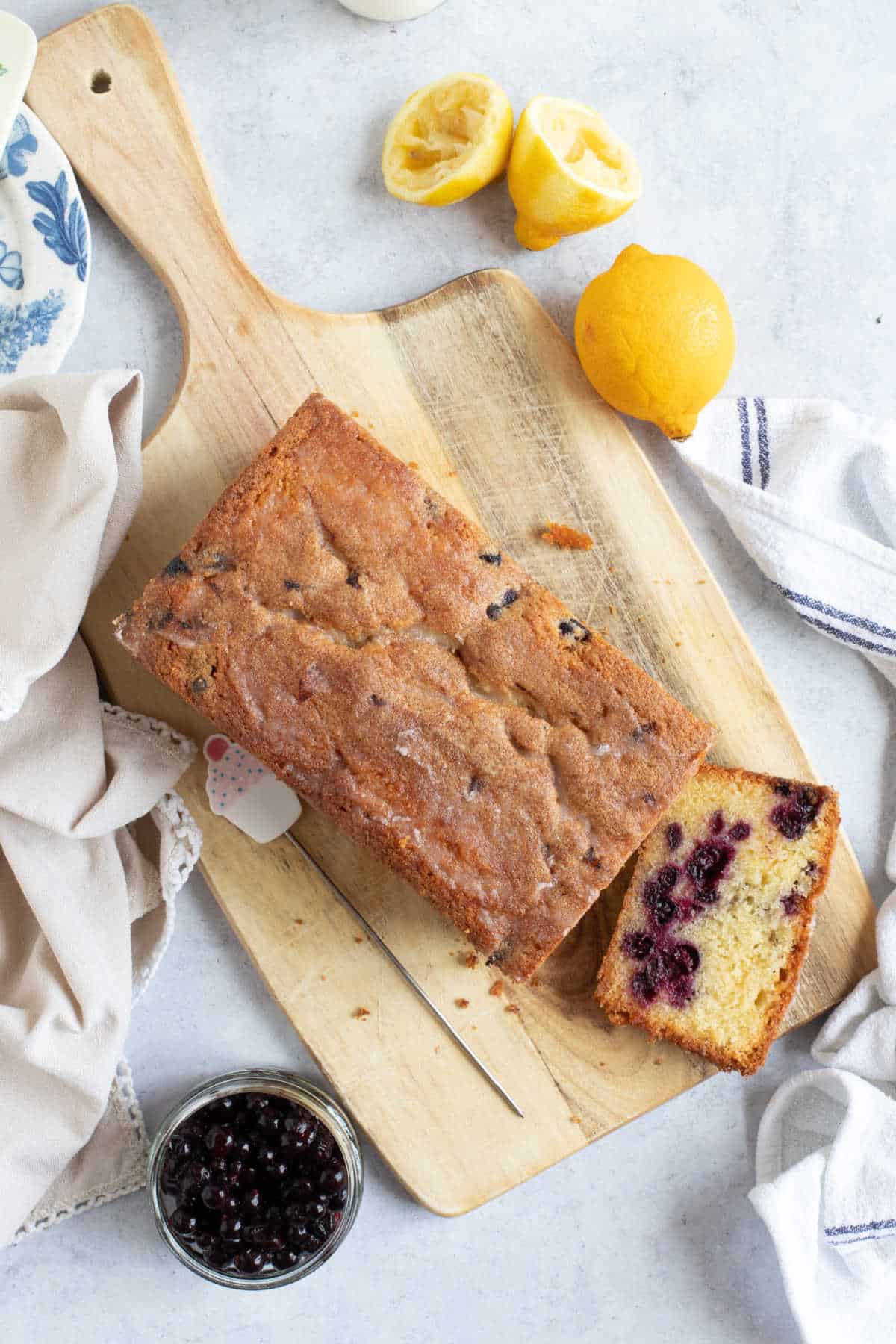
This easy blackcurrant cake is a soft, buttery loaf cake packed with tart, juicy blackcurrants and finished with a crisp lemon drizzle topping. You can make it with fresh blackcurrants during the summer or frozen blackcurrants at any time of year.
Save this recipe for later?
Quick Summary - Lemon and Blackcurrant Loaf Cake
This is one of my favourite cakes to make when our blackcurrant bushes are heavy with fruit. The sharp berries work particularly well in a rich buttery sponge, but it's the crisp lemon drizzle that really brings everything together. Beth (Effortless Foodie)
🕒 Ready In: 1 hour 20 minutes
👪 Serves: 10
🍽 Calories: 403 per slice
🥣 Main Ingredients: Blackcurrants, plain flour, unsalted butter, caster sugar, eggs, self-raising flour, ground almonds, lemon zest, lemon juice.
👩🍳 Difficulty: Easy
👌 Why this recipe? The layer of plain batter at the bottom helps keep the blackcurrants evenly distributed rather than sinking, while ground almonds keep the crumb tender and a crunchy lemon drizzle balances the naturally tart fruit.
Summarise & Save This Content On
Ground almonds give the cake a tender crumb, while fresh lemon zest and the sweet lemon drizzle balance the sharpness of the fruit.
Baked in a standard 2 lb loaf tin, this simple blackcurrant cake is perfect for afternoon tea, picnics, bake sales or dessert with a spoonful of crème fraîche.
When making the cake, I found that putting a layer of plain batter into the loaf tin before folding the blackcurrants through the remaining mixture helped distribute the fruit more evenly. It also reduced the number of berries that sank to the bottom of the cake.
I have made the recipe with both freshly picked and frozen blackcurrants. Frozen berries can be added directly to the batter without thawing, although the cake may need a few additional minutes in the oven.
Love blackcurrants? Try my easy blackcurrant coulis, blackcurrant crumble, blackcurrant compote and blackcurrant muffin recipes next!
Jump to:
- Quick Summary - Lemon and Blackcurrant Loaf Cake
- Why you'll love this blackcurrant cake recipe!
- 5* Reader reviews
- What are blackcurrants?
- Ingredient notes
- Need to substitute an ingredient?
- Variations
- Make it even better!
- How to make black currant cake
- Beth's top tips
- Serving suggestions
- Storage
- Blackcurrant cake FAQs
- Troubleshooting guide
- More loaf cake recipes
- Recipe
- 💬 Comments
Why you'll love this blackcurrant cake recipe!
- Fresh or frozen blackcurrants can be used, so you can make the cake throughout the year.
- The sharp blackcurrants are balanced by fresh lemon zest and a sweet, crunchy lemon drizzle.
- Ground almonds help create a soft, tender crumb and prevent the cake from drying out.
- A layer of plain batter at the bottom of the tin helps stop all the blackcurrants from sinking.
- It is baked in a standard 2 lb loaf tin and cuts easily into thick slices.
- The cake freezes well, making it useful for preparing ahead.
5* Reader reviews
Just made your blackcurrant cake. Super easy to make, but more importantly it tastes great! Love it, thank you.
- Elaine
I didn't make this cake-- but I ate it!! A friend baked this recipe for us using our black currants and it was wonderful. We sliced it, froze it and popped slices in the toaster to thaw and refresh the dough. Excellent.
- Wis
What are blackcurrants?
Blackcurrants are small, dark purple berries with a strong, sharp flavour. They are usually harvested in the UK between July and August, although frozen blackcurrants are available throughout the year.
Their natural tartness makes them particularly good for baking because their flavour remains noticeable after sugar is added. Blackcurrants pair especially well with lemon, almond, apple, vanilla and white chocolate.
Ingredient notes
A full ingredients list along with Metric and US Customary measurements, can be found in the recipe card at the end of this post.
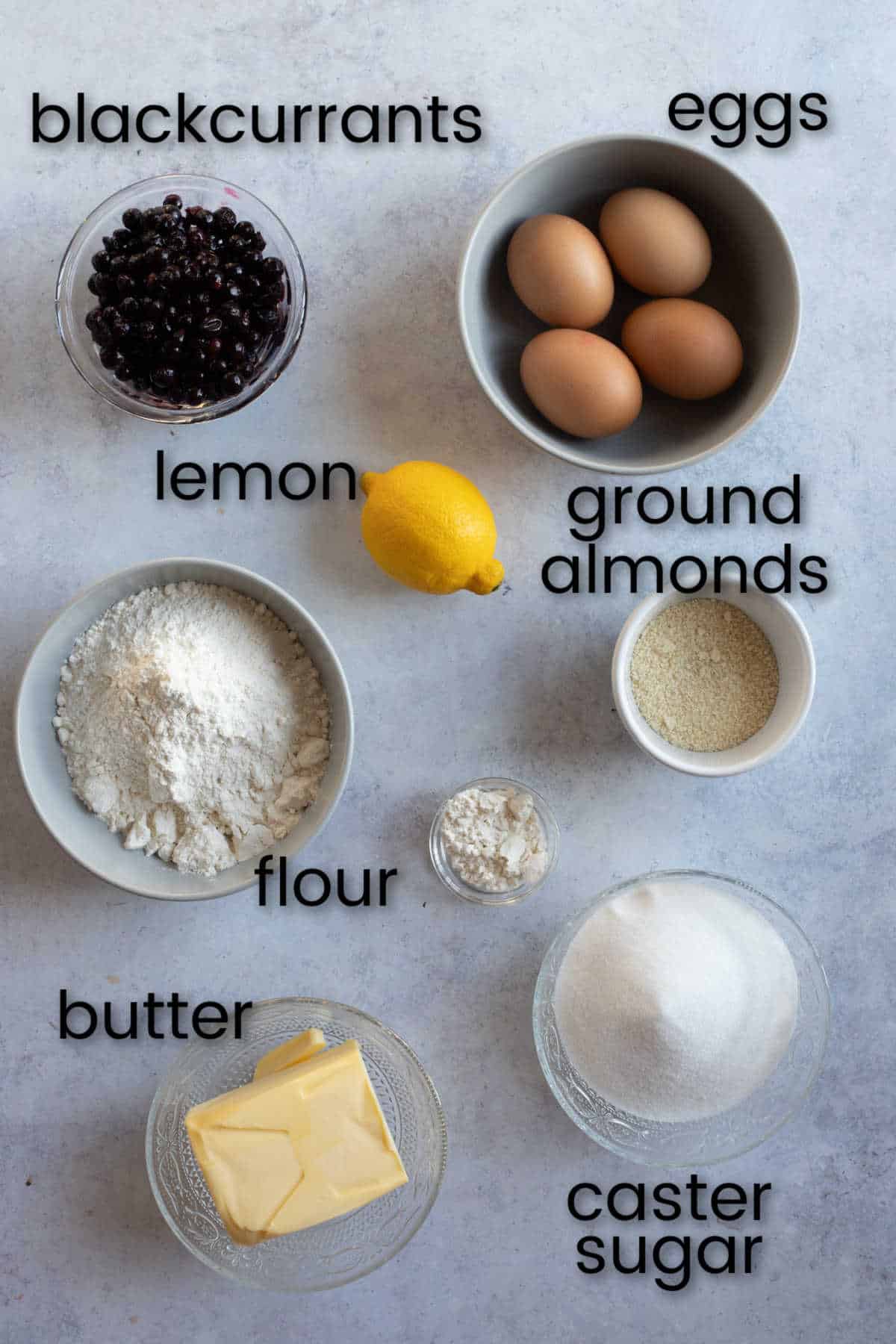
Blackcurrants - use fresh or frozen blackcurrants. Their tart flavour balances the sweet sponge and lemon drizzle. There is no need to thaw frozen blackcurrants first.
Plain Flour - one tablespoon is needed to coat the blackcurrants before they are added to the cake mixture. This helps the thick cake batter hold onto the fruit and reduces sinking.
Butter - unsalted butter which has been softened.
Sugar - white caster sugar or granulated sugar can be used.
Eggs - 4 large eggs at room temperature.
Lemon - both the zest and juice are used. The zest flavours the sponge, while the juice is mixed with sugar to make the drizzle.
Flour - self-raising flour, or use plain flour with 1 teaspoon of baking powder added.
Ground Almonds - give the loaf a softer, more tender crumb and add a subtle almond flavour.
The lemon drizzle is made by mixing caster sugar with fresh lemon juice.
Need to substitute an ingredient?
Have an allergy or dietary preference? Let AI customise the recipe for you.
Variations
- Swap the lemon zest for vanilla extract or orange zest.
- Use other berries such as raspberries, blueberries, or blackberries (you might want to try my blackberry loaf cake).
- Top the cake with a crumble topping rather than a lemon drizzle.
- Add a few drops of almond extract to the cake mixture and scatter flaked almonds over the top before baking.
- Fold white chocolate chips through the batter with the blackcurrants. The sweet white chocolate works particularly well with the sharp berries.
Make it even better!
Add More Protein
- Serve with 100g cottage cheese blended with a little vanilla extract and honey for around 11g extra protein without overpowering the cake.
Boost the Fibre
- Replace 50g of the self-raising flour with wholemeal self-raising flour to increase the fibre while keeping the cake light.
Add Healthy Fats
- Serve each slice with 1 tablespoon almond butter (15g) for around 8g healthy unsaturated fats that pair beautifully with lemon and blackcurrants.
- Sprinkle in 1 tablespoon chopped walnuts (10g) to add heart-healthy omega-3 fats and a delicious nutty texture.
How to make black currant cake
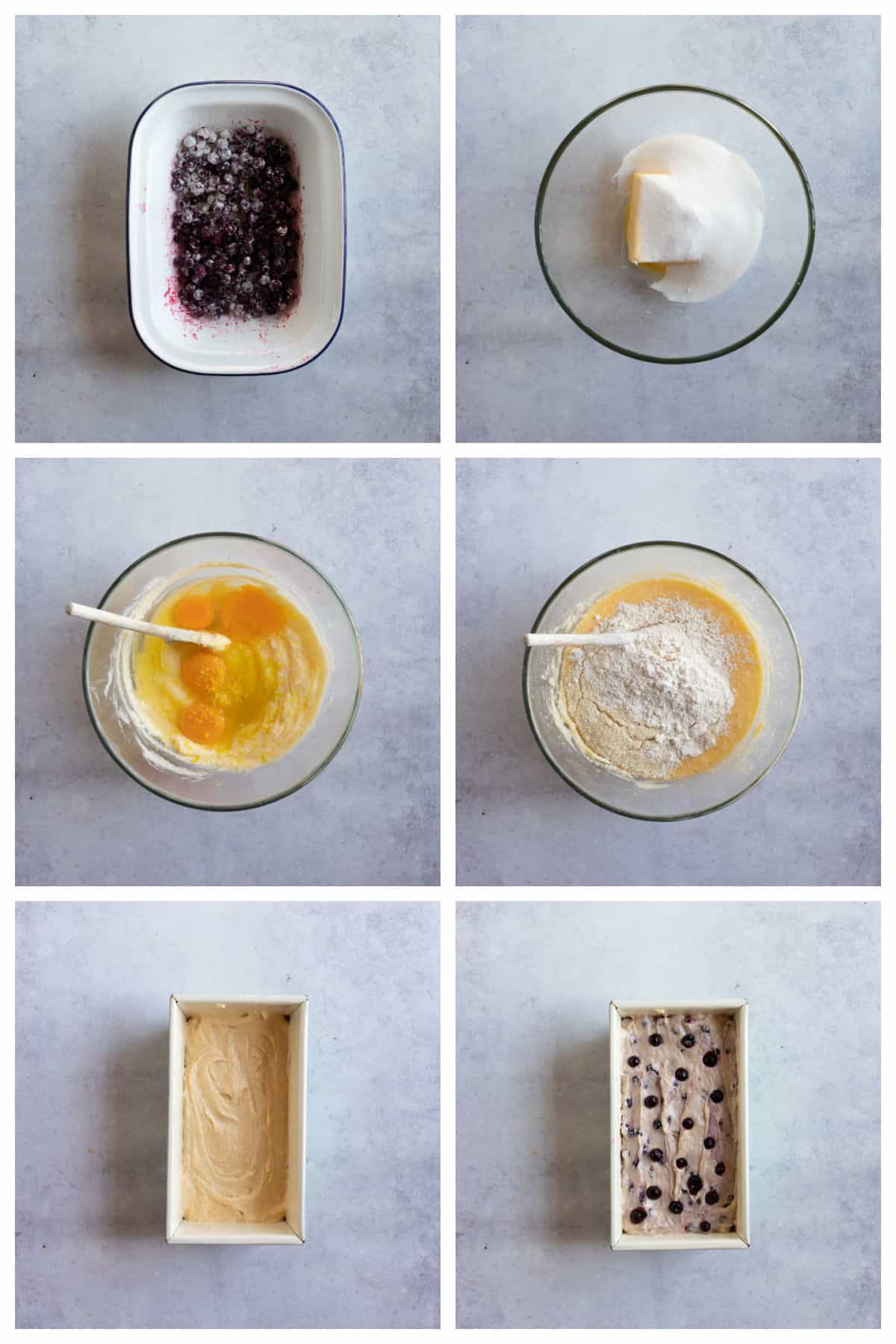
Prep: Preheat the oven to 180°C, 160°C fan, Gas 4, 350°F . Grease and line a 2 lb loaf tin with baking paper, leaving enough paper overhanging the sides to help lift out the finished cake.
One: Place the fresh or frozen blackcurrants in a small bowl and gently toss them with the plain flour. Coating the berries gives the cake batter a better chance of holding them in place during baking.
Two: In a large mixing bowl cream together the butter and sugar with a wooden spoon (or hand mixer) until pale and fluffy.
Three: Add the eggs one at a time, beating well after each addition. If the mixture begins to look curdled, beat in a spoonful of the measured flour before adding the next egg. A slightly curdled mixture will not ruin the cake, but adding the eggs gradually helps create a more even crumb.
Four: Fold in the self-raising flour, ground almonds and finely grated lemon zest.
Five: Spoon half the cake mixture into the loaf tin.
Six: Gently fold the flour-coated blackcurrants through the remaining batter, then spoon it into the tin. Level the top without pressing the mixture down.
Seven: Bake for 1 hour 10 minutes. Cover with foil after 50 minutes to prevent the top of the cake from burning. The blackcurrant cake is ready when it is well risen, deep golden and beginning to pull very slightly away from the sides of the tin. Insert a skewer into the sponge in the middle of the cake, avoiding a blackcurrant. It should come out without wet cake batter attached.
Eight: Mix together the caster and lemon juice for the drizzle. As soon as the cake comes out of the oven, use a skewer to make a few small holes in the top. Spoon over the lemon drizzle, allowing some of it to soak into the sponge while the remaining sugar forms a crunchy topping.
Nine: Allow the cake to cool in the tin. Run a round-edged knife between the cake and the tin and carefully remove to a cake plate.
Beth's top tips
- Make sure the butter is properly softened before creaming it with the sugar. Butter that is too cold will not trap enough air, while melted butter can make the cake greasy.
- Bring the eggs to room temperature so they combine more easily with the butter mixture. Cold eggs are more likely to make the batter curdle.
- Coat the blackcurrants in flour and add a layer of plain batter to the bottom of the tin to help prevent the fruit from sinking.
- Do not overmix the batter once the flour has been added. Fold only until the ingredients are combined.
- Avoid opening the oven door during the first 50 minutes of baking because the sudden drop in temperature may cause the centre of the cake to sink.
- Check the cake with a skewer in more than one place. Blackcurrant juice can make a fully baked cake appear wetter than it really is.
Serving suggestions
Serve the blackcurrant cake for afternoon tea, pack slices into lunchboxes, or take on summer picnics. It's also nice for breakfast with Greek yogurt!
It's a delicious dessert with ice cream (try my easy no churn honeycomb ice cream recipe), or whipped cream.
Storage
Store - In an airtight container at room temperature for up to three days. The cake can be kept in the fridge for slightly longer, although refrigeration will make the sponge firmer. Bring individual slices back to room temperature before serving.
Freeze - allow the cake to cool completely before freezing. Wrap the whole loaf or individual slices securely in cling film and place them in a freezer-safe container or bag. Freeze for up to three months.
Blackcurrant cake FAQs
Yes. Frozen blackcurrants work well and can be added directly to the batter without thawing. Shake off any loose ice, coat the berries in flour and fold them into the cake mixture at the final stage.
No. Thawing causes blackcurrants to release a lot of juice, which can turn the batter purple and create wet patches in the cake. Use them straight from frozen.
Coat the blackcurrants in a small amount of flour and make sure the cake batter is thick enough to support them. For this recipe, a layer of plain cake batter is also spread over the base of the loaf tin before the berries are folded into the remaining mixture. This helps prevent all the fruit from sinking to the bottom.
Yes. Replace the ground almonds with the same weight of self-raising flour. The cake will have a slightly firmer and less tender texture, but it will still taste good.
The recipe is designed for a 2 lb loaf tin. Using a different shape or size of tin will change the depth of the batter and therefore the baking time. A shallower cake will cook more quickly, while a smaller or deeper tin will take longer and may overflow. Check the cake early if changing the tin and use the visual doneness tests rather than relying only on the stated baking time.
Troubleshooting guide
Why have my blackcurrants sunk to the bottom?
Make sure the blackcurrants are dry before tossing them in the plain flour. Adding a layer of plain batter to the bottom of the tin before folding the berries through the remaining mixture also helps keep them evenly distributed.
Why is my blackcurrant cake wet in the middle?
The cake may simply need longer in the oven. Loaf cakes are deep and can look cooked on the outside before the centre is ready. Cover the top loosely with foil and continue baking until a skewer inserted into the sponge comes out without wet batter.
How can I tell the difference between undercooked cake and blackcurrant juice?
Insert the skewer in a couple of different places, trying to avoid the berries. Purple juice or a little moisture from a blackcurrant is fine; sticky, pale cake batter means it needs longer in the oven.
Why has my cake mixture curdled?
This usually happens when the eggs are too cold or added too quickly. Use room-temperature eggs and beat them in one at a time. If the mixture starts to curdle, beat in a spoonful of the measured flour before adding the next egg.
Why is my blackcurrant cake dense or heavy?
Overmixing after adding the flour can make the cake dense. Fold the flour and ground almonds in gently and stop as soon as everything is combined. Make sure your self-raising flour is also within its best-before date.
Why has my cake sunk in the middle?
Opening the oven door too early, underbaking or adding too much liquid can cause the centre to sink. Avoid opening the oven during the first 50 minutes and check that the cake is fully baked before removing it.
Why is the top getting too dark?
Loaf cakes need a relatively long baking time, so the top can brown before the centre is cooked. Loosely cover the cake with foil after around 50 minutes and continue baking until the middle is done.
Why has my cake turned purple?
This is more likely when using frozen blackcurrants that have been thawed, as they release lots of juice. Add frozen blackcurrants straight from the freezer and fold them through the batter as gently as possible.
Why isn't my lemon drizzle crunchy?
Spoon the sugar and lemon mixture over the cake as soon as it comes out of the oven. Don't add too much lemon juice-the mixture should be thick and sugary rather than a thin syrup. Granulated sugar can also be used for an even crunchier finish.
More loaf cake recipes
- Lime and Coconut Loaf Cake
- Marzipan Loaf Cake
- Lemon Curd Loaf Cake made with homemade lemon curd
- Madeira Loaf Cake
- Golden Syrup Loaf Cake
- Banana and Blueberry Bread
Tried it? Let me know what you think and rate it ⭐️ below. Tag me @effortlessf00d-I'd love to see! Don't forget to subscribe for more recipes.
Recipe

Easy Blackcurrant Cake
Save this recipe for later?
Ingredients
- 175 g Blackcurrants stems removed, washed & dried
- 1 tablespoon Plain Flour (all-purpose flour)
- 225 g Unsalted Butter
- 225 g Caster Sugar (granulated sugar)
- 4 Eggs large
- 200 g Self Raising Flour (self-rising flour)
- 30 g Ground Almonds (almond flour)
- 1 Lemon zest only
For the lemon drizzle
- 60 g Caster Sugar (granulated sugar)
- 1-2 tablespoon Lemon Juice
Instructions
- Preheat the oven to 180°c (160 fan/ Gas 4/ 350F) and grease and line a 2lb loaf tin with non stick baking parchment.
- Place the fresh or frozen blackcurrants in a small bowl and gently toss them with a spoonful of the measured flour. Coating the berries gives the cake batter a better chance of holding them in place during baking.175 g Blackcurrants, 1 tablespoon Plain Flour (all-purpose flour)
- Place the softened butter and caster sugar in a large mixing bowl. Beat with an electric hand mixer or wooden spoon until pale, light and fluffy. This usually takes three to four minutes. Scrape down the sides of the bowl once or twice so everything is evenly combined.225 g Unsalted Butter, 225 g Caster Sugar (granulated sugar)
- Add the eggs one at a time, beating well after each addition. If the mixture begins to look curdled, beat in a spoonful of the measured flour before adding the next egg. A slightly curdled mixture will not ruin the cake, but adding the eggs gradually helps create a more even crumb.4 Eggs
- Fold in the self-raising flour, ground almonds and finely grated lemon zest using a large metal spoon or spatula.200 g Self Raising Flour (self-rising flour), 30 g Ground Almonds (almond flour), 1 Lemon
- Spoon half the cake mixture into the loaf tin.
- Gently fold the flour-coated blackcurrants through the remaining batter, then spoon it into the tin. Level the top without pressing the mixture down. Adding plain batter to the tin first creates a berry-free base and helps prevent all the fruit from collecting at the bottom.
- Bake for 1 hour 10 minutes. Cover with foil after 50 minutes to prevent the top of the cake from burning.
- Mix together the caster and lemon juice for the drizzle. As soon as the cake comes out of the oven, use a skewer to make a few small holes in the top. Spoon over the lemon drizzle, allowing some of it to soak into the sponge while the remaining sugar forms a crunchy topping.60 g Caster Sugar (granulated sugar), 1-2 tablespoon Lemon Juice
- Allow the cake to cool in the tin. Run a round-edged knife between the cake and the tin and carefully remove to a cake plate.
Notes
- Use room temperature ingredients for the lightest, most even-textured cake.
- Don't thaw frozen blackcurrants before adding them to the batter. Toss them with a little flour first to help prevent sinking.
- Spread a layer of plain batter into the tin before adding the fruit-filled batter to help keep the blackcurrants evenly distributed.
- Avoid overmixing once the flour has been added or the cake may become dense.
- Start checking after 50 minutes. If the top is browning too quickly but the centre isn't cooked, loosely cover with foil and continue baking.
- Test for doneness by inserting a skewer into the centre of the sponge (avoid a berry). It should come out without wet batter attached.
- Pour the lemon drizzle over the cake while it's still hot so some soaks into the sponge while the sugar forms a crisp topping.
- The cake freezes well for up to 3 months. Freeze whole or in individual slices for an easy treat
Wis Prof says
I didn't make this cake-- but I ate it!! A friend baked this recipefor us using our black currants and it was wonderful. We sliced it, froze it and popped slices in the toaster to thaw and refresh the dough. Excellent.
Lizzie says
If using frozen fruit do you defrost them before tossing in the plain flour?
Beth Sachs says
No there's no need to.
Elaine Williams says
Just made your blackcurrant cake. Super easy to make, but more importantly it tastes great! Love it, thank you.