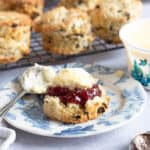
Easy Fruit Scones
Learn how to make delicious fruit scones with this easy recipe! Serve with jam and clotted cream for a classic British tea-time treat!
Servings 10
Calories 306kcal
Save this recipe for later?
Equipment
Ingredients
- 450 g Self Raising Flour
- 1 teaspoon Bicarbonate of Soda
- ¼ teaspoon Salt
- 100 g Butter cold and cubed
- 50 g Caster Sugar
- 300 ml Buttermilk see note below if using homemade buttermilk
- 1 teaspoon Vanilla Extract
- 150 g Currants or use raisins or sultanas
- 3 tablespoon Milk for glazing
Instructions
- Preheat the oven to 220°c (200° fan/ 400F/ Gas 6). Line a large baking sheet with baking paper.
- Sieve the flour into a large mixing bowl and mix in the bicarbonate of soda and salt.450 g Self Raising Flour, 1 tsp Bicarbonate of Soda, ¼ tsp Salt
- Rub in the cold cubed butter with your hands until you get fine breadcrumbs. You could also do this in a food processor, but be careful not to over-process the mixture, which would result in tough scones.100 g Butter
- Stir in the caster sugar.50 g Caster Sugar
- Add the buttermilk, vanilla extract, and currants and mix with a metal knife until combined. Use your hands to then bring the dough together.300 ml Buttermilk, 1 tsp Vanilla Extract, 150 g Currants
- Shape the dough into a round on a lightly floured work surface to around 4cm thick. Use a 5cm fluted biscuit cutter to stamp out the scones. You'll need to reform the dough a couple of times to get the maximum number of scones.
- Place the scones on a lined baking tray and glaze with milk. Bake in a hot oven for 12 minutes or until golden brown.3 tbsp Milk
Notes
Expert Tips:
- If you can't get hold of buttermilk at the grocery store, you can make your own buttermilk by squeezing some lemon juice into milk and leaving it to stand at room temperature for 15 minutes before using it. The buttermilk helps the scones to become light and fluffy.
- 💡 Pro Tip: Homemade buttermilk is thinner than commercially produced buttermilk. You may not need to use the full amount as it could make your dough too thin and sticky. If using homemade buttermilk, add half the amount to start with and gradually add more if needed in order to make a soft dough.
- Always use cold cubed butter straight from the fridge. If you try to rub in soft warm butter you will be left with a sticky mess. Cold butter helps to keep the dough cool and gives the scones the perfect flakey texture once baked.
- You don't need a rolling pin to roll out the dough. Just shape it with your hands for rustic-looking scones.
- Make plain scones and omit the dried fruit.
- Add lemon zest for a citrus zing.
- Swap the currants for glace or dried cherries.
- Add fresh berries such as blueberries for blueberry scones.
- Add walnuts for crunch and texture, or why not have a go at making my easy date and walnut scones!
Nutritional Information (Approximate)
Calories: 306kcal | Carbohydrates: 54g | Protein: 9g | Fat: 7g | Saturated Fat: 1g | Polyunsaturated Fat: 1g | Monounsaturated Fat: 1g | Cholesterol: 4mg | Sodium: 209mg | Potassium: 217mg | Fiber: 2g | Sugar: 16g | Vitamin A: 74IU | Vitamin C: 1mg | Calcium: 72mg | Iron: 1mg
Tried this recipe?Snap a pic and tag @effortlessf00d on Instagram and leave a comment on this post!
