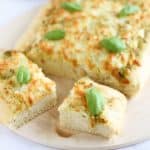
Pesto Focaccia Bread Recipe
Easy pesto focaccia bread recipe: soft inside, crisp outside, topped with basil pesto, Parmesan, and herbs. Perfect with pasta or soup.
Servings 8
Calories 341kcal
Save this recipe for later?
Equipment
- Baking Tin
Ingredients
- 500 g Strong White Bread Flour
- 1½ teaspoon Salt
- 325 ml Tepid Water
- 1 teaspoon Caster Sugar
- 7 g Fast Action Yeast
- 2 tablespoon Extra Virgin Olive Oil
- 5 tablespoon Pesto
- 30 g Parmesan grated
- 1 teaspoon Sea Salt Flakes
- 10 Basil leaves
- 2 tablespoon Extra Virgin Olive Oil for drizzling
Instructions
- Place the strong bread flour and salt in a large bowl and mix together. In a separate jug or small bowl, combine the yeast and sugar with 325 ml of tepid water. Pour the yeast mixture and olive oil into the flour and bring everything together with your hands until a rough dough forms.500 g Strong White Bread Flour, 1½ tsp Salt, 325 ml Tepid Water, 1 tsp Caster Sugar, 7 g Fast Action Yeast, 2 tbsp Extra Virgin Olive Oil
- Knead the dough on a lightly floured surface for 10 minutes until smooth and elastic. Alternatively, you can use a stand mixer with a dough hook. Place the dough in a lightly oiled bowl and cover with cling film.
- Leave the dough to rise in a warm spot for about 1 hour, or until it has doubled in size.
- Lightly oil a baking tray and gently press the dough out with your hands so it spreads to the edges - no rolling pin needed. Cover with a clean tea towel and leave it to rise for 40 minutes.
- Preheat the oven to 220 °C (200 °C fan/ 430 °F/ Gas 7). Use your fingertips to make dimples all over the dough - this helps the focaccia hold the olive oil and pesto, giving it a soft, flavourful crumb.
- Bake the dough for 15 minutes until it starts to turn golden. Remove from the oven and spoon over the pesto, then sprinkle with grated Parmesan and a pinch of sea salt. Return to the oven for another 5-8 minutes, until the top is golden, bubbling, and aromatic.5 tbsp Pesto, 30 g Parmesan, 1 tsp Sea Salt Flakes
- Drizzle with extra-virgin olive oil, scatter over basil leaves and serve warm.10 Basil leaves
Notes
- Use strong bread flour for a chewy, structured crumb; all-purpose flour works for a softer loaf.
- Make sure yeast is fresh and water is tepid to get a good rise.
- First rise: about 1 hour until doubled; second rise: 40 minutes after shaping.
- Bake in a hot oven for a crisp crust; add pesto and Parmesan in the last 5–8 minutes.
- Serve warm with pasta, risotto, or soup; dough can be frozen after first rise, cooked bread freezes up to 3 months.
Nutritional Information (Approximate)
Calories: 341kcal | Carbohydrates: 47g | Protein: 9g | Fat: 12g | Saturated Fat: 2g | Cholesterol: 3mg | Sodium: 585mg | Potassium: 63mg | Fiber: 2g | Sugar: 1g | Vitamin A: 245IU | Calcium: 69mg | Iron: 1mg
Tried this recipe?Snap a pic and tag @effortlessf00d on Instagram and leave a comment on this post!
